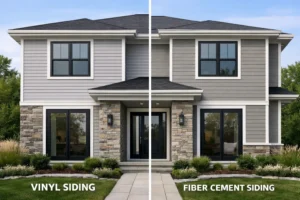
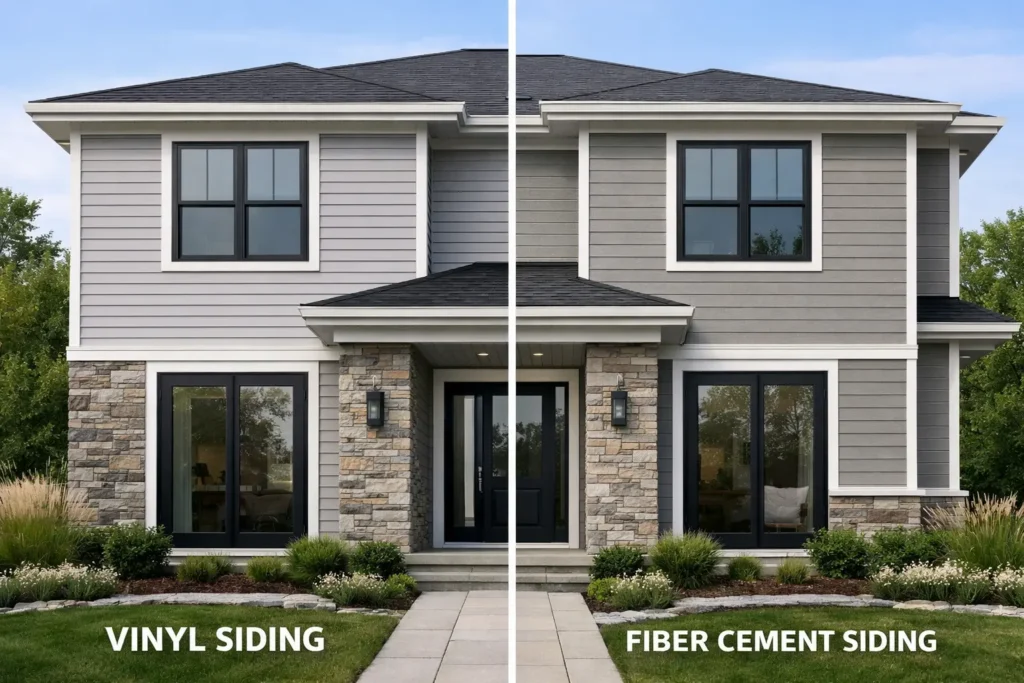
Choosing between vinyl and Fiber Cement Siding material influences your home’s durability, appearance, and property value. Siding protects your building envelope from weather, defines your home’s curb appeal, and significantly affects long-term maintenance costs.
Homeowners face dozens of siding options for homes, but the two front-runners in today’s market are fiber cement siding and vinyl siding. Your choice can determine how much you’ll spend on home improvement, how often you’ll need repairs, and even how much you can resell your home for.
This siding decision guide explores the critical differences between vinyl and fiber cement siding, helping you make an informed, value-driven decision.
What Is Fiber Cement Siding?
Fiber cement siding is an engineered siding material made from Portland cement, cellulose fibers, sand, and water. These components create a composite material that’s strong, moisture-resistant, and non-combustible.
Key Benefits of Fiber Cement Siding:
- Durability: Resists fire, insects, and rot.
- Weather Protection: Withstands extreme wind and rain.
- Longevity: Often lasts 30–50 years with proper care.
- Aesthetic Flexibility: Can mimic wood, stucco, or stone.
- Eco-Responsibility: Can contribute to LEED points if sourced sustainably.
James Hardie is the most recognized brand, offering the Hardie board line with baked-on ColorPlus® Technology for long-term color retention.
What Is Vinyl Siding?
Vinyl siding is a plastic composite made primarily from PVC (polyvinyl chloride) and other polymers. It is formed through a plastic extrusion process, creating lightweight, weather-resistant panels.
Advantages of Vinyl Siding:
- Affordability: One of the lowest-cost siding options.
- Low Maintenance: Doesn’t require painting or sealing.
- Flexible Installation: Suitable for DIY or professional installs.
- Color Retention: UV-stabilized to reduce fading.
- Variety: Available in many colors and profiles.
Common brands include CertainTeed and Ply Gem, offering ranges from basic vinyl cladding to insulated vinyl panels.
Fiber Cement Siding vs. Vinyl—Key Differences
The table below highlights how fiber cement siding and vinyl siding compare across essential attributes:
Attribute | Fiber Cement Siding | Vinyl Siding |
Durability | High impact resistance, fire-resistant | Moderate impact resistance, melts in fire |
Lifespan | 30–50 years | 20–30 years |
Maintenance | Requires repainting every 10–15 years | Low maintenance, occasional cleaning |
Cost-to-Value Ratio | Higher upfront, better resale ROI | Lower cost, moderate ROI |
Installation | Requires special tools, pro-only | Easier, can be DIY |
Moisture Resistance | Excellent when properly installed | Good, but prone to warping in high humidity |
Aesthetics | Mimics wood or stucco, paintable surface | Prefabricated look, limited texture depth |
Cost Breakdown and Long-Term ROI
Vinyl siding costs $3 to $8 per square foot installed, making it one of the most budget-friendly options. Fiber cement siding typically ranges from $6 to $12 per square foot installed, due to material weight and labor complexity.
Real-World Cost Comparison (1,500 sq ft home):
- Vinyl siding total cost: $4,500–$12,000
- Fiber cement siding total cost: $9,000–$18,000
Despite higher initial costs, fiber cement often delivers a better siding ROI, with returns of 68–75% at resale compared to 63–67% for vinyl (Remodeling Magazine, 2023).
Energy Efficiency and Insulation
Vinyl siding can include insulated backing, improving its R-value to around R-2.0 to R-2.7, depending on the thickness and product type.
Fiber cement siding, by itself, offers minimal insulation (R-value ~0.5), but can be paired with external insulation boards to improve performance.
Key Considerations:
- Vinyl with insulation reduces thermal bridging.
- Fiber cement suits homes with advanced wall systems.
- Neither material is inherently high-efficiency, but both contribute to an airtight weatherproof envelope when installed correctly.
Maintenance Requirements and Lifespan
Fiber Cement Maintenance:
- Repaint every 10–15 years
- Annual inspections for cracks or moisture
- Resists mildew and UV damage
Vinyl Siding Maintenance:
- Wash annually to prevent mold
- No painting required
- More vulnerable to cracking from impact
Expected Lifespans:
- Fiber cement: 30–50 years
- Vinyl siding: 20–30 years
Both materials require occasional care, but fiber cement has a higher durability rating and longer lifespan under proper conditions.
Environmental Impact and Sustainability
Fiber Cement:
- Made from natural materials
- Lower VOC emissions
- Recyclable but energy-intensive production
- Can meet LEED certification standards
Vinyl Siding:
- Made from fossil fuel-derived PVC
- Difficult to recycle, produces higher embodied carbon
- Some brands now offer recycling programs
Fiber cement is considered more eco-friendly over the product lifecycle, especially if sourced responsibly and installed with sustainable remodel goals.
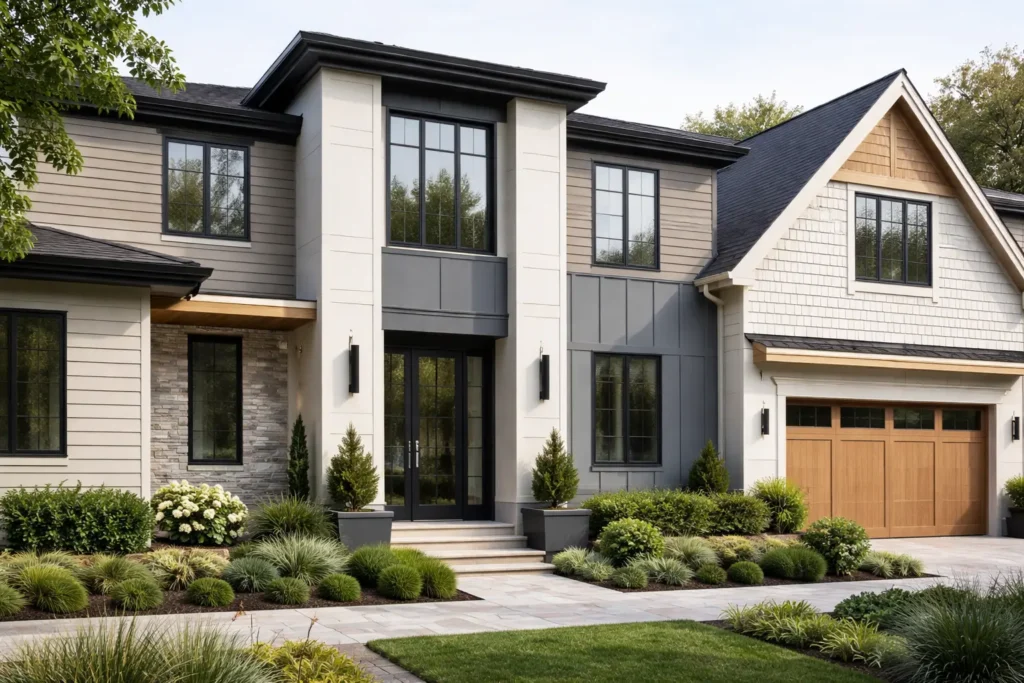
Design & Aesthetic Options
Fiber Cement Design Features:
- Lap, shingle, and board-and-batten styles
- Paintable surface
- Authentic wood grain textures
- Works well for modern, farmhouse, and craftsman homes
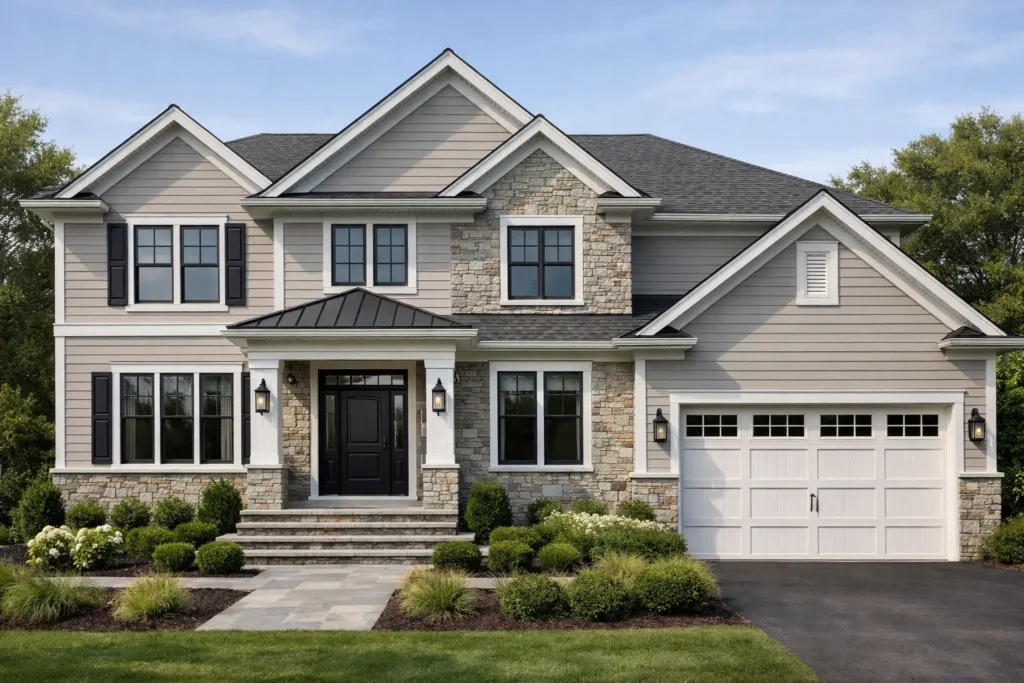
Vinyl Siding Options:
- Wide color range
- Wood-look textures, though less realistic
- Comes in factory-finished panels
- Suits traditional and suburban styles
Color fade is slower in fiber cement due to baked-on finishes. Vinyl siding retains color well, especially with UV-stabilized polymers.
Regional Suitability – Climate Considerations
Best Siding for Hot/Humid Climates:
- Fiber cement resists moisture and high UV
- Vinyl may warp or fade under prolonged heat
Best Siding for Cold Climates:
- Vinyl can brittle and crack during freeze-thaw cycles
- Fiber cement stays stable and protects against snow and ice
Fire-Prone Regions:
- Fiber cement is non-combustible
- Vinyl melts at low temperatures
In high-wind or coastal zones, both need proper fastening, but fiber cement provides stronger storm-proof siding capabilities.
Top Brands: James Hardie, Nichiha & Vinyl Competitors
Fiber Cement Brands:
- James Hardie: HardiePlank®, ColorPlus®, HardieZone® system
- Nichiha: Commercial and residential siding, modern aesthetics
Vinyl Siding Brands:
- CertainTeed: Wide range of colors and styles
- Ply Gem: Offers insulated vinyl
- LP SmartSide: Though technically engineered wood, it is often compared with fiber cement
Brand choice affects product warranties, fade protection, and technology options like SmartGuard® protection or ColorPlus® coating.
Final Decision—Which Siding Is Best for You?
The best siding material depends on your budget, climate, design goals, and maintenance tolerance.
Choose Fiber Cement Siding if:
- You want maximum durability and fire resistance
- You live in a humid, storm-prone, or fire-prone region
- You seek a high-end look and better ROI
Choose Vinyl Siding if:
- Your budget is limited
- You prefer DIY-friendly installation
- You live in a mild climate with low-impact weather
Match your choice to your home style, budget-conscious remodel plans, and regional demands to ensure lasting performance and aesthetic satisfaction.
✅ FAQ Section
Yes, fiber cement is more impact-resistant and fireproof and lasts longer than vinyl.
Fiber cement lasts 30–50 years, while vinyl siding typically lasts 20–30 years.
Yes, it offers a higher ROI at resale and boosts curb appeal significantly.
Vinyl has higher carbon emissions and is less recyclable than fiber cement.
Fiber cement performs better in heat and humidity due to its moisture resistance.
It’s not recommended. It requires special tools and is best installed by professionals.
Fiber cement siding typically offers the highest return on investment at resale.
Want More High-Quality Roofing Projects on Long Island?
G&V Roofing delivers trusted craftsmanship, reliable service, and local expertise that turns property owners into lifelong clients—all from one professional source.
Our Services:
Slate Roofing—Elegant, long-lasting, and perfect for upscale homes.
Tile Roofing—Durable and stylish roofing built to handle the Northeast climate.
Residential Roofing—From repairs to full replacements, we protect your home like it’s our own.
Commercial Roofing—Professional-grade roofing systems for businesses and facilities.
Gutters—Proper drainage solutions to protect your foundation and landscaping.
Windows—Energy-efficient and beautiful—enhance your view and lower utility bills.
Siding—Boost curb appeal and protect your exterior with high-performance materials.
Learn About:
Choosing the Right Roofing Materials for Long Island Homes
Roofing Tips for Nassau & Suffolk County Weather
How to Spot Roof Damage Before It Becomes Expensive
The Real Cost of Delaying Roof Repairs
Seasonal Roof Maintenance Checklists
🏡 Looking to Upgrade Your Roof or Protect Your Property Investment?
Whether you’re a homeowner looking for reliable roof solutions or a property manager seeking fast, expert repairs—G&V Roofing is your go-to Long Island partner for long-lasting protection and peace of mind.
Follow Us for the Latest in Roofing Care, Property Protection & Home Improvement:
Tiktok: Watch fast transformations, tips from the crew, and roofing secrets revealed
YouTube: Explore step-by-step guides, customer stories, and full project showcases
Instagram: See beautiful before-and-afters, behind-the-scenes content, and premium materials
Facebook: Read reviews, see featured jobs, and connect with the local G&V Roofing community
Contact G&V Roofing today and discover why craftsmanship matters