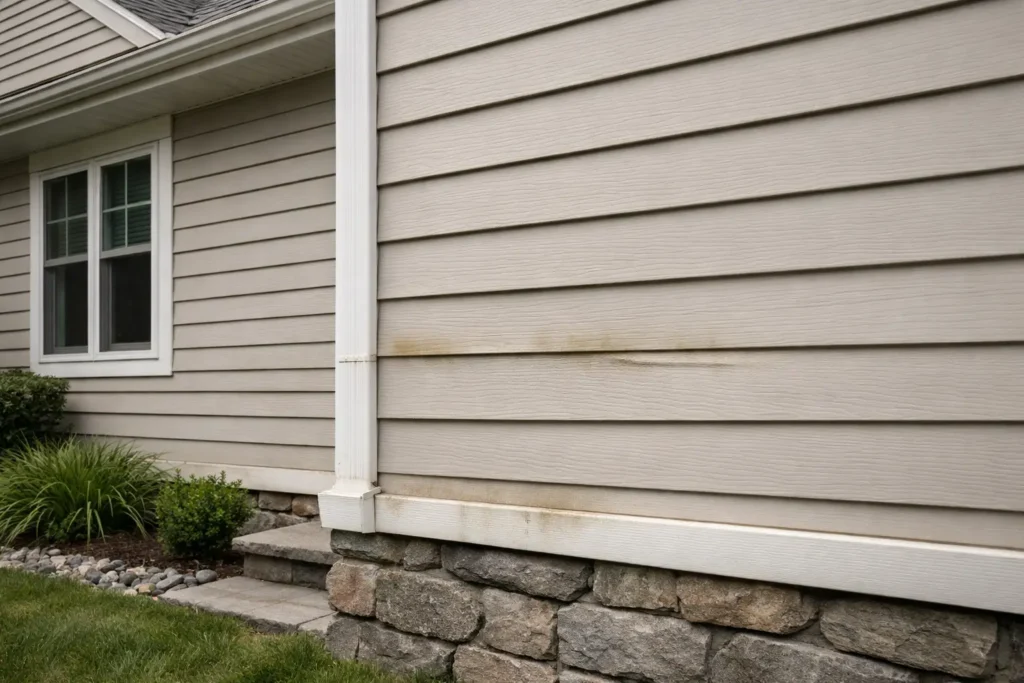
How House Siding Protects Against Moisture and Heat Loss

House Siding Prevents Moisture

Table of Contents

House Siding Prevents Moisture

Learn how house siding prevents moisture damage by forming a durable barrier that safeguards your home’s structure, boosts energy efficiency, and supports healthier indoor air.

How Does Moisture Affect Your Home’s Structure?

Moisture infiltrates the building envelope and causes:

  • Wood rot in structural framing
  • Insulation saturation, reducing thermal performance
  • Degradation of drywall and flooring materials


When humidity levels rise within the walls, condensation forms, weakening studs and joists. Persistent exposure leads to thermal bridging, where heat escapes through cold, damp areas.

What Indoor Problems Are Caused by Moisture Buildup?

Trapped moisture inside a home leads to:

  • Growth of mold spores, especially in hidden wall cavities
  • Musty odors and increased allergy symptoms
  • Peeling paint and bubbling surfaces


High indoor humidity also contributes to vapor diffusion—a process where moisture moves through walls and ceilings, disrupting insulation and lowering energy efficiency.

What Are the Long-Term Effects of Moisture-Related Home Issues?

  • Structural integrity loss
  • Compromised R-values of insulation
  • Elevated heating and cooling bills
  • Increased risk of respiratory issues


Next, we’ll break down how siding directly blocks water from entering your walls.

How House Siding Prevents Moisture Penetration in Walls

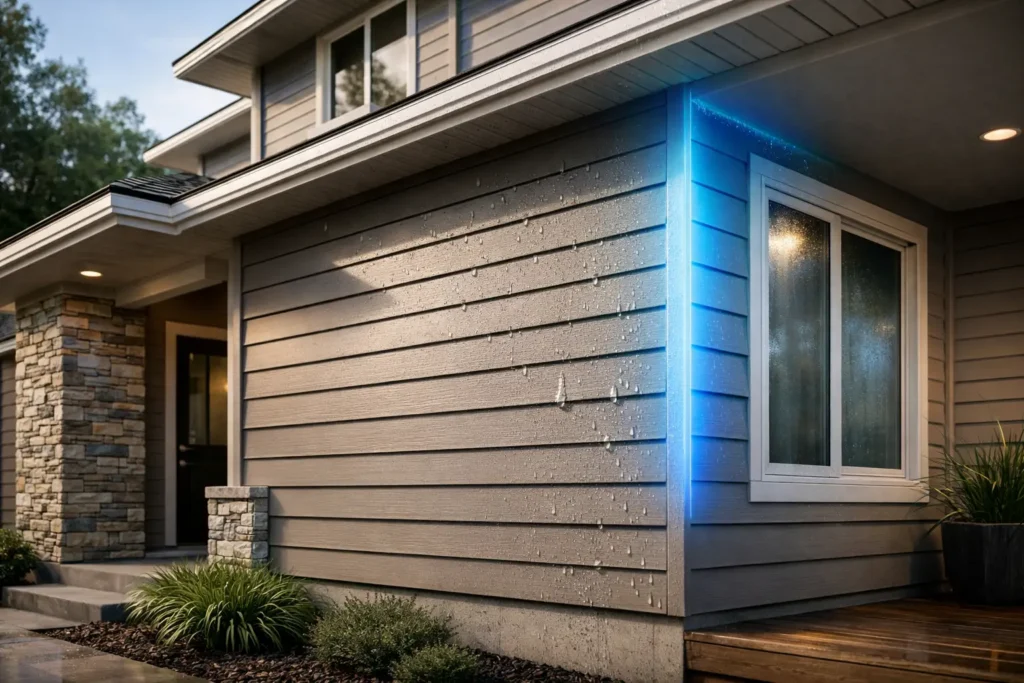
Siding acts as a moisture-resistant barrier that protects your home’s outer shell. Its design addresses water movement through physical layers and engineered materials.

What Are the Moisture-Blocking Components in Siding?

Modern siding systems are multi-layered and include:

  • Exterior cladding (e.g., vinyl, fiber cement)
  • A weather barrier or house wrap
  • Flashing around windows and joints
  • A drainage plane or rainscreen to guide water downward


Each layer works together to redirect water and minimize capillary action—the process by which water can seep into small openings and travel upward into walls.

How Does House  Siding Stop Capillary Water Movement?

Siding incorporates features like:

  • Capillary breaks between layers
  • Overlapping siding joints
  • Integrated weep holes and drainage channels


These elements block water from reaching internal wall cavities, preventing water infiltration and structural damage.

What House Siding Materials Offer the Best Moisture Protection?

  • Vinyl siding resists water naturally and requires minimal sealing.
  • Fiber cement siding has low permeability and resists warping.
  • Metal siding provides strong water deflection but needs sealed seams.


All these materials can include moisture-resistant siding treatments to extend their water-repellent properties.

In the next section, we’ll look at how water inside walls leads to heat loss—and how siding helps prevent that.

How House Siding Prevents Moisture From Causing Heat Loss

Wet insulation cannot insulate. Moisture within walls dramatically reduces thermal resistance (R-value), leading to increased heat transfer and energy costs.

How Does Moisture Impact Energy Efficiency?

  • Insulation saturation lowers R-values by up to 50%
  • Vapor transmission carries moisture into insulation layers
  • Cold spots from dew point formation cause energy leaks


Water conducts heat better than air. When insulation absorbs moisture, it loses its trapped air pockets—resulting in thermal inefficiency and drafts.

How Does House Siding Prevent Moisture-Related Heat Loss?

Siding protects insulation by:

  • Acting as a thermal buffer against wind and rain
  • Preventing vapor diffusion into wall assemblies
  • Blocking air infiltration that carries humidity into cavities


Proper siding blocks both liquid water and water vapor, helping maintain the R-value of internal insulation.

What Are the Benefits of Siding for Heat Retention?

  • Lower heating and cooling bills
  • Enhanced building insulation performance
  • Improved indoor temperature consistency
  • Reduced risk of R-value degradation over time


Next, we’ll compare siding materials based on their moisture and heat-loss prevention capabilities.

Best Materials for House Siding Prevent Moisture and Heat Loss

House Siding Prevents Moisture

Different siding materials offer unique levels of moisture protection and thermal performance. Here’s a comparison based on R-values, permeability, and longevity.

Comparison Table: Siding Material Performance

Siding Type

R-Value Range

Moisture Resistance

Lifespan (Years)

Maintenance Cycle

Vinyl Siding

0.61–1.2*

High (non-absorbent)

20–40

Low

Fiber Cement

0.5–0.6

Moderate to High

30–50

Medium

Wood Siding

0.8–1.2

Low (needs sealing)

20–30

High

Insulated Siding

2.0–3.5

Very High

30–50

Low

Metal Siding

0.2–0.8

High (with sealing)

40–60

Low to Medium

*Standard vinyl R-values; insulated versions can reach 3.5

What Is the Most Energy-Efficient House Siding Option?

Insulated vinyl siding offers the highest combination of:

  • Moisture resistance
  • Insulation backing
  • Low permeability rating
  • Minimal maintenance


It’s ideal for colder climates or homes with high humidity exposure.

Next, we’ll explore how installation techniques influence siding performance.

Installation Techniques That Enhance Moisture Protection

Even the best siding fails without proper installation. Moisture often enters through poorly sealed gaps or improperly flashed areas.

What Are the Key House  Siding Installation Techniques for Moisture Control?

  • Flashing tape around windows and doors
  • Overlapping panels to direct water downward
  • Joint sealing with weatherproof caulk
  • Use of house wrap and vapor barrier membranes


Installers must ensure correct fastener placement, maintain air gaps, and include weep holes to allow drainage.

How Does Improper Installation Lead to Moisture Problems?

  • Trapped water causes mold spots and warping
  • Gaps allow air infiltration, increasing heat loss
  • Unsealed joints promote moisture path into wall cavities


Complying with installation codes ensures siding performs as a full moisture-control system.

In the next section, we’ll show how to spot signs of siding failure before major damage sets in.

Signs Your Current House Siding Isn’t Preventing Moisture

House Siding Prevents Moisture

Many homeowners don’t realize their siding is failing until energy bills rise or visible moisture damage appears.

What Are Exterior Signs of Moisture Problems in Siding?

  • Warped panels or bulging areas
  • Siding cracks or loose boards
  • Discoloration or bubbling paint
  • Rotting or swelling near siding joints

What Indoor Signs Indicate Moisture Intrusion?

  • Musty odors or persistent dampness
  • Visible mold spots on walls
  • Peeling paint or water stains near baseboards
  • Sudden energy bill increases

A thermal camera inspection can reveal cold spots and hidden heat loss due to moisture behind the walls.

How Can You Detect Siding Gaps or Failures?

  • Perform a visual inspection for damage
  • Look for joint separation or misalignment
  • Test humidity with indoor meters
  • Schedule a siding check before winter or rainy seasons

Now, we’ll answer common homeowner questions about siding and moisture protection.

FAQs About How Siding Prevents Moisture and Heat Loss

How does siding keep water out of my home?

Siding creates a layered barrier using cladding, flashing, and drainage to redirect rain and block capillary water entry.

Does siding help with insulation?

Yes. Siding protects insulation from moisture damage and reduces air leaks, maintaining its thermal performance.

What siding works best in wet climates?

Fiber cement and insulated vinyl siding are most effective due to their low permeability and resistance to rot.

How can I maintain my siding for moisture control?

  • Check for cracks or warping
  • Clean mold or mildew
  • Reseal joints every few years
  • Inspect flashing and weep holes


Is DIY siding inspection possible?

Yes. Use a flashlight to inspect for gaps, water stains, and loose boards. Monitor condensation levels and ventilation.


Can siding reduce my energy bills?

Yes. By blocking moisture and heat loss, energy-efficient siding can lower heating and cooling costs up to 15–20%.

Want More High-Quality Roofing Projects on Long Island?

G&V Roofing delivers trusted craftsmanship, reliable service, and local expertise that turns property owners into lifelong clients—all from one professional source.

Our Services:

🔨Slate Roofing—Elegant, long-lasting, and perfect for upscale homes.
🏛Tile Roofing—Durable and stylish roofing built to handle the Northeast climate.
🏠Residential Roofing—From repairs to full replacements, we protect your home like it’s our own.
🏢Commercial Roofing—Professional-grade roofing systems for businesses and facilities.
💧Gutters—Proper drainage solutions to protect your foundation and landscaping.
🪟WindowsEnergy-efficient and beautiful—enhance your view and lower utility bills.
🧱Siding—Boost curb appeal and protect your exterior with high-performance materials.

Learn About:

✅ Choosing the Right Roofing Materials for Long Island Homes
✅ Roofing Tips for Nassau & Suffolk County Weather
✅ How to Spot Roof Damage Before It Becomes Expensive
✅ The Real Cost of Delaying Roof Repairs
✅ Seasonal Roof Maintenance Checklists

🏡 Looking to Upgrade Your Roof or Protect Your Property Investment?

Whether you’re a homeowner looking for reliable roof solutions or a property manager seeking fast, expert repairs—G&V Roofing is your go-to Long Island partner for long-lasting protection and peace of mind.

📌Follow Us for the Latest in Roofing Care, Property Protection & Home Improvement:

🎵Tiktok: Watch fast transformations, tips from the crew, and roofing secrets revealed
🎥YouTube: Explore step-by-step guides, customer stories, and full project showcases
📸Instagram: See beautiful before-and-afters, behind-the-scenes content, and premium materials
👍Facebook: Read reviews, see featured jobs, and connect with the local G&V Roofing community

👉 Contact G&V Roofing today and discover why craftsmanship matters
With over 50 years of combined experience, George and Vinny deliver unmatched quality and reliability in roofing.

Table of Contents