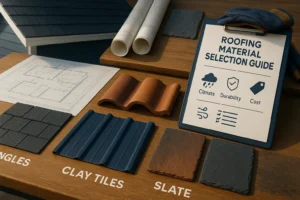
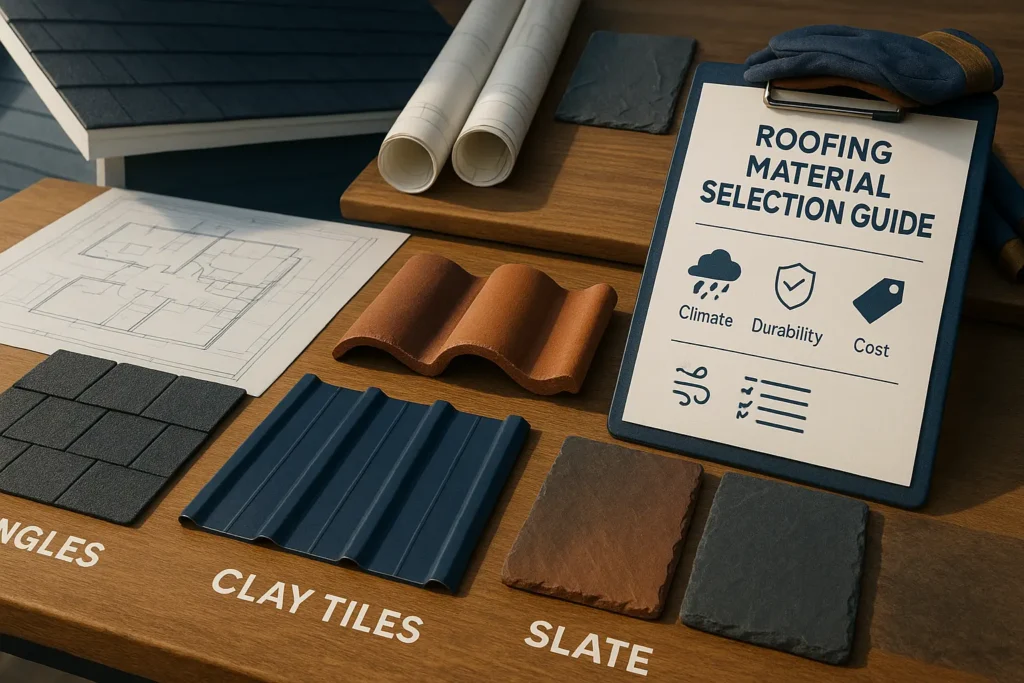
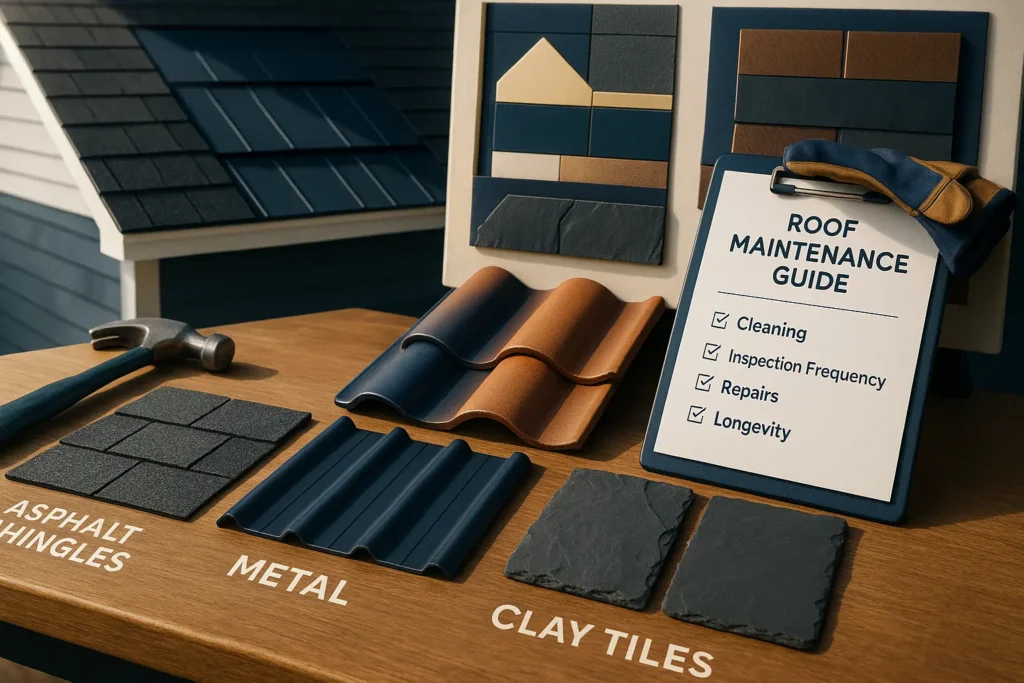
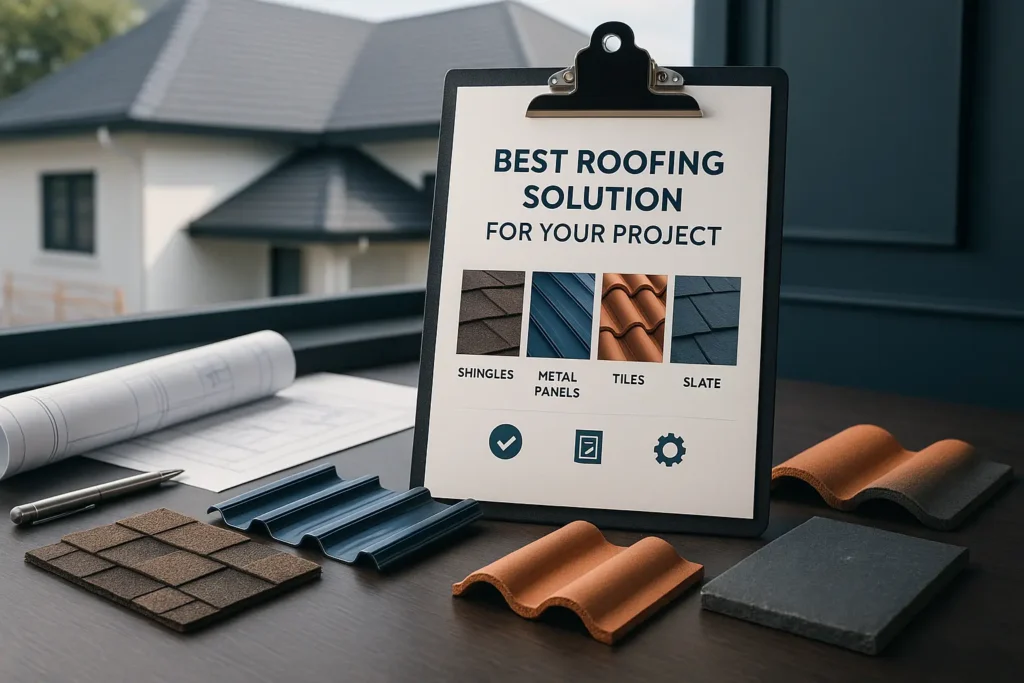
Choosing the right roofing material means balancing durability, budget, and local climate. Roofing solutions refer to customized systems tailored for either residential or commercial properties, not just a material, but a strategic match for your building’s structure, purpose, and environment.
A professional roofing contractor evaluates several factors:
- Lifespan and leak prevention
- Structural compatibility
- Region-specific risks (e.g. hail or heat)
- Overall cost-effectiveness
A proper roofing material selection boosts property value, reduces future repair costs, and improves energy efficiency.
Next, we’ll compare the most common types of roofing materials available today.
What Are the Most Common Roofing Solutions Material?
Most roofing projects use one of six widely recognized materials. Each has unique strengths and weaknesses depending on your needs.
Roofing Material | Pros | Cons | Best For |
Asphalt Shingles | Affordable, easy to install, moderate lifespan | Shorter lifespan (~15-30 years), not eco-friendly | Budget residential roofs |
Metal Roofs | Long lifespan, fire-resistant, recyclable | Higher upfront cost, noise potential | Hot climates, energy savings |
Clay Tiles | Great thermal efficiency, durable, UV-resistant | Heavy, expensive, fragile during installation | Mediterranean or desert-style homes |
Slate | Exceptional lifespan (75–100+ years), elegant | High cost, heavy weight, needs skilled labor | Historic or high-end homes |
Composite Shingles | Mimics slate or wood, lighter, varied styles | May have limited durability depending on brand | Modern homes needing aesthetic + value |
EPDM Roofing | Low-cost, UV/storm-resistant, flexible for flat roofs | Prone to punctures, visible seams | Commercial flat roofs |
Each material affects your project’s timeline, maintenance plan, and long-term value.
In the next section, we’ll explore how climate plays a role in your roofing choice.
How Does Climate Impact Roofing Material Selection?
Roofing must adapt to weather stressors. The best roofing solution in one region may fail in another.
Climate-Based Roofing Recommendations
Climate Type | Roofing Priorities | Best Roofing Materials |
Hot & Sunny | Reflect heat, UV protection, reduce solar absorption | Metal roofs, reflective coatings, solar tiles |
Cold & Snowy | Withstand snow load, insulation, freeze-thaw cycles | Slate, asphalt shingles, metal (snow-shedding) |
Storm-Prone | Wind uplift rating, hail resistance, water-tight seals | EPDM, metal panels, Class 4 shingles |
Humid or Wet | Mold resistance, ventilation, moisture barriers | Tile roofs, treated wood shakes, synthetic shingles |
UV exposure, hail impact resistance, and ventilation performance should be checked on each product’s datasheet. Look for materials with high wind uplift ratings and freeze-thaw durability if relevant to your location.
Next, we’ll assess roofing solutions based on your budget.
Roofing Solutions for Different Budgets
Whether you’re planning a starter home upgrade or a commercial overhaul, your budget defines the scope of your roofing project.
Budget-Based Roofing Comparison
Budget Tier | Material Options | Avg. Lifespan | ROI Consideration |
Low-Cost | 3-tab asphalt shingles, EPDM | 15–25 years | Ideal for short-term property holders |
Mid-Range | Architectural shingles, metal panels | 30–50 years | Balanced cost vs. value |
High-End | Slate, clay tile, composite, solar shingles | 50–100+ years | High resale value, long-term ROI |
Longer-lifespan materials often carry higher installation costs but lower repair frequency and better resale impact. Some roofing choices qualify for extended warranties, lowering lifetime cost.
In the next section, we focus on eco-friendly and sustainable roofing.
What Are Sustainable Roofing Solutions?
Eco-conscious homeowners and developers now prioritize roofing systems with minimal environmental impact and high energy efficiency.
Popular Green Roofing Options
- Recycled Shingles: Made from rubber, plastic, or wood fiber
- Solar Roofing: Solar panels or integrated solar shingles
- Cool Roofs: High solar reflectance, lower thermal emissivity
- Green Roofs: Living vegetation layer over waterproofing membrane
Sustainability Metric | Impact Example |
Energy Savings | Reflective metal roofs reduce cooling load by 10–15% |
Recyclable | Metal, clay, and certain composites can be 100% recycled |
Carbon Footprint | Recycled content reduces raw material demand |
LEED Compliance | Many materials meet or support LEED certification |
Eco roof options often qualify for tax credits or utility rebates, especially if energy-efficient roofs are installed.
Next, we’ll review maintenance differences between materials.
How Do Roofing Materials Differ in Maintenance?
Different materials demand different maintenance schedules and costs.
Roofing Maintenance Requirements by Material
Material | Maintenance Tasks | Frequency |
Asphalt Shingles | Replace damaged shingles, inspect sealant | Annually |
Metal Roofs | Clear debris, recoat protective layers | Every 2–3 years |
Tile/Slate | Check for cracks, moss removal, flashing repair | Bi-annually |
EPDM | Clean surface, check seams | Twice a year |
Low maintenance materials like composite shingles or metal save time and reduce repair costs over decades.
Next, we’ll answer some commonly asked questions.
Residential vs. Commercial Roofing Solutions
Residential roofs typically use pitched designs, while commercial roofing systems often have flat or low-slope structures.
Key Differences
Attribute | Residential | Commercial |
Roof Type | Sloped (gabled, hip) | Flat or low slope |
Material Commonality | Asphalt shingles, tiles | EPDM, TPO, metal panels |
Load Considerations | Snow load, attic ventilation | HVAC load, membrane puncture resistance |
Fire Rating Needs | Class A standard for homes | Strict code compliance for safety zones |
Membrane roofing (like TPO or PVC) suits commercial buildings for its water resistance and large-area efficiency.
Next, we explore the latest roofing innovations.
What Are the New Innovations in Roofing Solutions Technology?
Modern roofing now includes smart materials and connected technology that improve efficiency and performance.
Roofing Solutions Technology Trends
- Solar Shingles: Integrated power generation
- Cool Roofs: Reflective nanocoatings for passive cooling
- Self-Healing Membranes: Seal small punctures automatically
- IoT Sensors: Detect leaks, monitor moisture, send alerts
- Advanced Insulation: Improves thermal performance, reduces HVAC use
Smart roofing systems reduce maintenance, optimize energy use, and provide real-time data for building management.
Next, learn how to find the right contractor for your roofing solution.
How to Choose the Right Roofing Solutions Contractor
A certified roofing installer ensures correct material installation, long-term durability, and warranty protection.
Tips for Hiring the Right Roofing Contractor
- Verify Licensing: Must meet local regulations
- Check Reviews: Google, BBB, and testimonials matter
- Ask for Certifications: GAF, CertainTeed, Owens Corning certified installers
- Request Written Estimates: Include scope, timeline, labor costs
- Check Warranty Terms: Both material and installation coverage
Trustworthy contractors provide clear service agreements, have insurance, and maintain installation precision with a trained team.
Now let’s explore how roofing can directly influence energy bills.
How Roofing Affects Energy Efficiency
Your roofing material directly affects interior temperature regulation and cooling/heating costs.
Energy-Efficient Roofing Elements
- High R-value insulation: Reduces heat transfer
- Cool Roof Coatings: Reflects sunlight and reduces attic heat
- Solar Reflectance Index (SRI): Higher SRI = better heat reflection
- Thermal Emissivity: Measures how fast heat is released
Roof Type | Energy Benefit |
Cool Roofs | 7–15% cooling cost savings in hot climates |
Metal Roofs | Reflective and ventilated for passive cooling |
Green Roofs | Natural insulation and water absorption |
In warm regions, cool roofing materials drastically lower summer energy bills.
Next, we highlight how roofing impacts property value.
Roofing Solutions That Increase Property Value
A quality roof is a value-adding feature for any property. Appraisers, buyers, and real estate agents recognize roofing quality as a major selling point.
Roof Features That Add Value
- Curb Appeal: Aesthetically pleasing materials like slate or metal
- Longevity: High-end roofs signal long-term investment
- Energy Efficiency: Improves buyer interest
- Warranty Transferability: Adds assurance for buyers
On average, a new roof can yield a 60–70% ROI on resale. Homes with high-quality roofs sell faster and closer to the asking price.
Now we close by guiding you through how to match your roof to your exact project needs.
Matching the Right Roofing Solution to Your Project
The best roofing material is one that aligns with:
- Climate (UV, rain, wind, snow)
- Budget (initial and long-term)
- Property Type (residential or commercial)
- Architectural Style (historical, modern, functional)
- Sustainability Goals (green, recycled, solar-ready)
Use a decision matrix that weighs key attributes like cost, lifespan, and compatibility with local codes. Seek guidance from licensed professionals for the most customized roofing plan.
FAQs About Roofing Solutions
What are the best roofing solutions for extreme climates?
Metal panels and slate work well for snow, hail, and wind-prone areas due to impact and freeze resistance.
Which roofing materials last the longest?
Natural slate and clay tiles last 75–100 years with proper maintenance.
Are sustainable roofing solutions more expensive?
Initial costs can be higher, but energy savings and tax credits lower the total cost.
How can I compare roofing solutions for my region?
Check wind/hail ratings, solar reflectivity, and local building codes for guidance.
What’s the most affordable roofing material?
3-tab asphalt shingles offer the lowest upfront cost but shorter lifespan.
In the next section, we differentiate between residential and commercial roofing needs.
Want More High-Quality Roofing Projects on Long Island?
G&V Roofing delivers trusted craftsmanship, reliable service, and local expertise that turns property owners into lifelong clients—all from one professional source.
Our Services:
Slate Roofing—Elegant, long-lasting, and perfect for upscale homes.
Tile Roofing—Durable and stylish roofing built to handle the Northeast climate.
Residential Roofing—From repairs to full replacements, we protect your home like it’s our own.
Commercial Roofing—Professional-grade roofing systems for businesses and facilities.
Gutters—Proper drainage solutions to protect your foundation and landscaping.
Windows—Energy-efficient and beautiful—enhance your view and lower utility bills.
Siding—Boost curb appeal and protect your exterior with high-performance materials.
Learn About:
Choosing the Right Roofing Materials for Long Island Homes
Roofing Tips for Nassau & Suffolk County Weather
How to Spot Roof Damage Before It Becomes Expensive
The Real Cost of Delaying Roof Repairs
Seasonal Roof Maintenance Checklists
🏡 Looking to Upgrade Your Roof or Protect Your Property Investment?
Whether you’re a homeowner looking for reliable roof solutions or a property manager seeking fast, expert repairs—G&V Roofing is your go-to Long Island partner for long-lasting protection and peace of mind.
Follow Us for the Latest in Roofing Care, Property Protection & Home Improvement:
Tiktok: Watch fast transformations, tips from the crew, and roofing secrets revealed
YouTube: Explore step-by-step guides, customer stories, and full project showcases
Instagram: See beautiful before-and-afters, behind-the-scenes content, and premium materials
Facebook: Read reviews, see featured jobs, and connect with the local G&V Roofing community
Contact G&V Roofing today and discover why craftsmanship matters